I wanted to include the five most helpful adoption books I’ve read, as I think it made a difference having a bit of extra knowledge both before the girls came and in those early days.
- The Boy Who Was Raised as a Dog – Bruce Perry
- Creating Loving Attachments – Dan Hughes & Kim Golding
- Why was I adopted? – Carole Livingston
- No Matter What by Debi Gliori – (given to me by another adoptive parent)
- The Hackney child – Hope aniels
1. The Boy Who Was Raised as a Dog – Bruce Perry
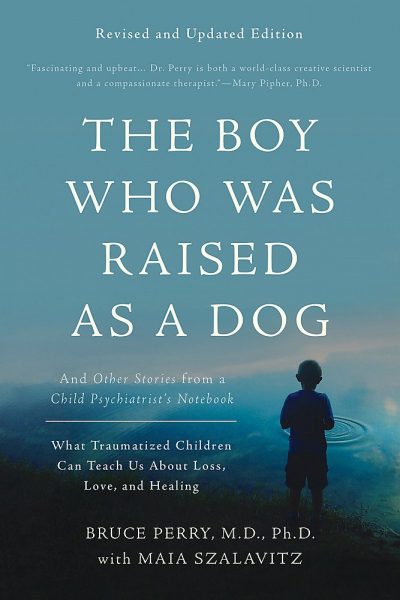
I read this just as the girls arrived – it helped a lot. Probably the book which has had the most influence on my understanding of attachment problems and how important time and attention are for our children. Dr Perry uses real case stories to explain why wiring of the brain in the first two years of life is so important, for all of us. After reading it, it made me aware of the behaviour of EVERYONE around me; it helped to understand that the origins of most ‘bad’ behaviour can be found in early experiences, particularly trauma. It just makes sense.
Dr Bruce Perry has researched neuroscience for 30 years, particularly the effects of prenatal drug exposure on brain development, the neurophysiology of traumatic life events and basic mechanisms related to the development of neurotransmitter receptors in the brain. From his website: ‘His clinical research and practice has focused on high-risk children. This work has examined the cognitive, behavioral, emotional, social, and physiological effects of neglect and trauma in children, adolescents and adults. This work has been instrumental in describing how childhood experiences, including neglect and traumatic stress, change the biology of the brain – and, thereby, the health of the child.’
2. Creating Loving Attachments by Dan Hughes & Kim Golding
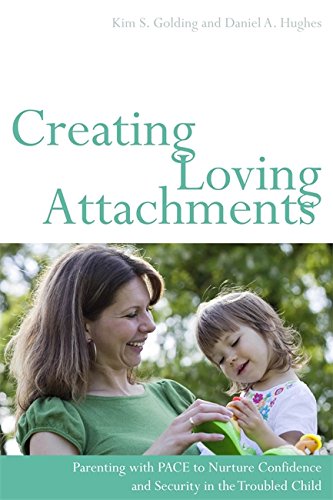
The Therapeutic parenting course that we went on for six months was based on Dan Hughes ‘PACE’ – Playfulness, Acceptance, Curiosity and Empathy. I can’t say that I do this all the time as a parent, I’m not a saint, but it definitely does help if you can use these behaviours some of the time. When your child is feeling so much anger and rage that it’s hard to reach them physically and emotionally, in the moment, it is difficult to know what to do. Most of all, don’t beat yourself up if you don’t follow the methods and advice all of the time. Nobody is perfect and I think it’s good for your kids to know that you need to just walk away sometimes.
What I learnt pretty early on after adopting was that parenting children from traumatic backgrounds, whether through birth family neglect and abuse or damage from an overburdened care system, is very different from ‘normal’ parenting. This book definitely helps to find a way forward.
3. No Matter What by Debi Gliori
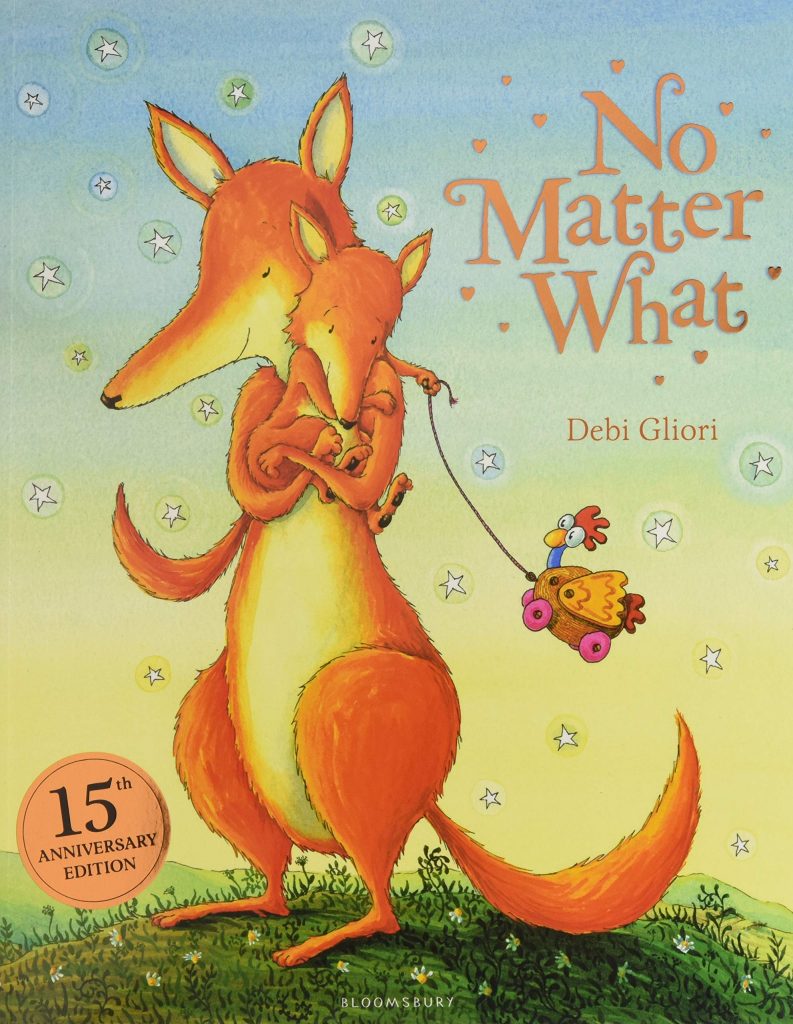
This book was given to me by another adoptive parent, just after the girls arrived. It is beautiful and a great one to read at bedtime, particularly after a difficult day. It is a phrase that has stuck with me since first reading it:
‘NO MATTER WHAT’. No matter what you do, I will love, be here for you. It’s not easy. When things are broken and smashed. Walls, furniture, duvets and toys are written and scribbled on in Sharpie pen and clothes are ripped. Doors kicked and slammed and furniture is hurled at windows and curtains are ripped from poles for the umpteenth time, you have to remind yourself. No matter what.
4. Why was I adopted? by Carole Livingston
Quite an old book, but it’s down to earth and helps to open discussions about the reasons for adoption.
5. The Hackney Child – by Hope Daniels
One for me. I heard about this book after listening to an interview with the lady who wrote the book. It was an insight into another world, a world where survival was the main pastime. The author had no childhood. Every adopted child is different, but it helped me to get an insight into what neglect might feel like. In the early days of our adopting, I spent a lot of time thinking about what might have been. Did we do the right thing, should the girls have stayed with their birth family. Books like these helped me to realise that no, they shouldn’t.
No matter how much professional support is available to a birth parent, without parenting skills or empathy, the journey if they are able, is long. Their child doesn’t have that time. Whilst their birth parent might be heading back towards the ‘right’ pathway, their child’s childhood is slipping away as an inability to self-regulate masks intellectual ability. I makes a successful school career extremely difficult. Hope Daniels is the exception rather than the rule.